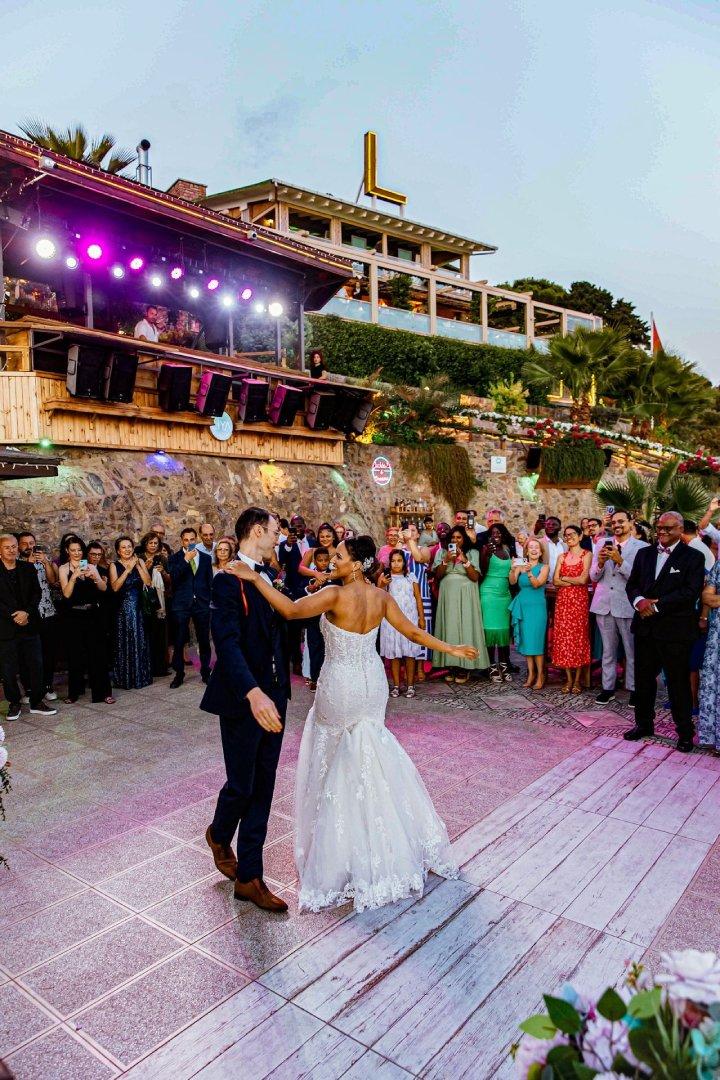
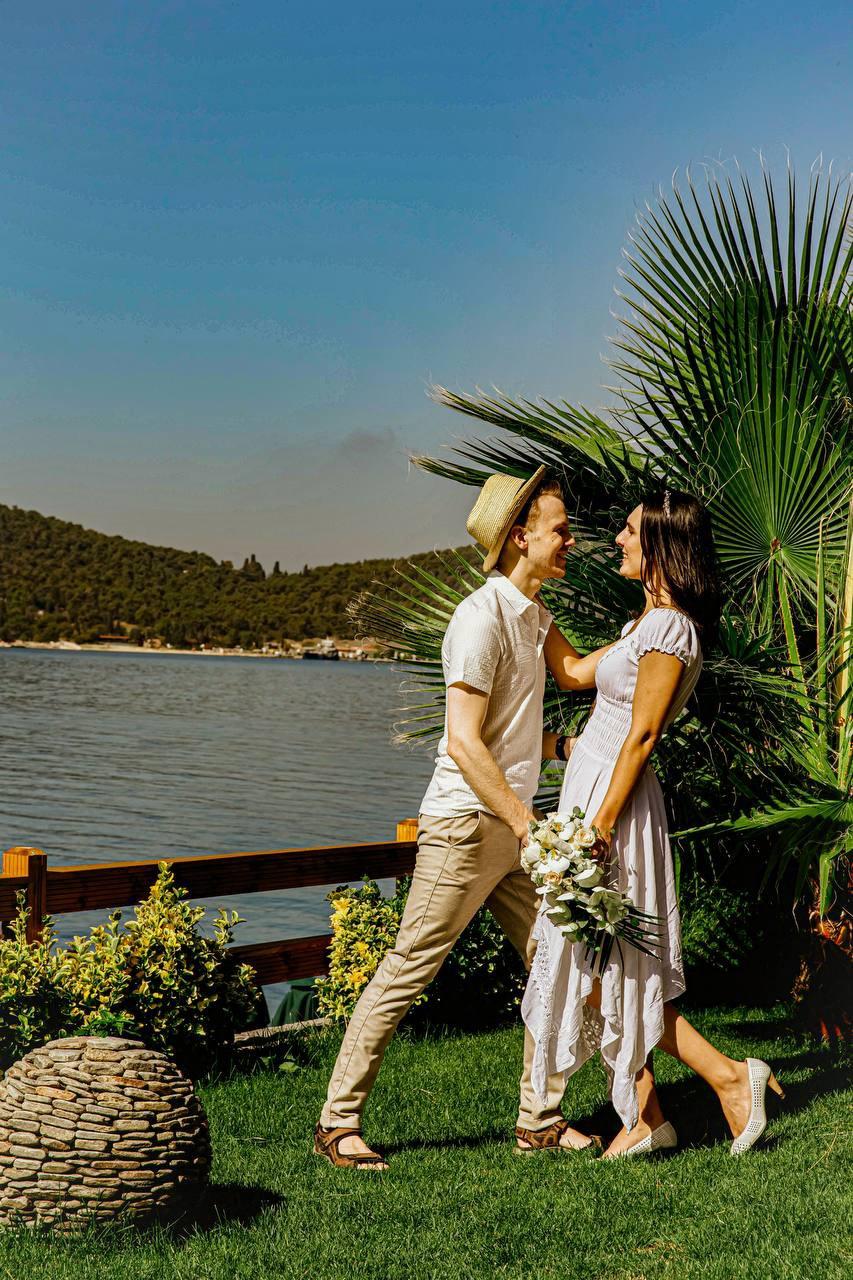
What Is a Destination Wedding? A Complete Planning Guide
A destination wedding is a wedding held away from the place where a couple normally lives, in a location chosen not only as a venue but as part of the overall celebration. The destination can shape how guests arrive, where they stay, how the day is organised and how the wedding itself is experienced.
For some couples, that means travelling to another country. For others, it may mean choosing a different city, a coastal setting or an island that feels distinct from everyday life. In every case, the defining idea is the same: the location becomes part of the wedding experience, not simply the backdrop.
This guide explains what a destination wedding means, how it differs from a more local wedding, who it can suit, what couples should consider when planning one and how destinations such as Istanbul, Türkiye can work for an international wedding.
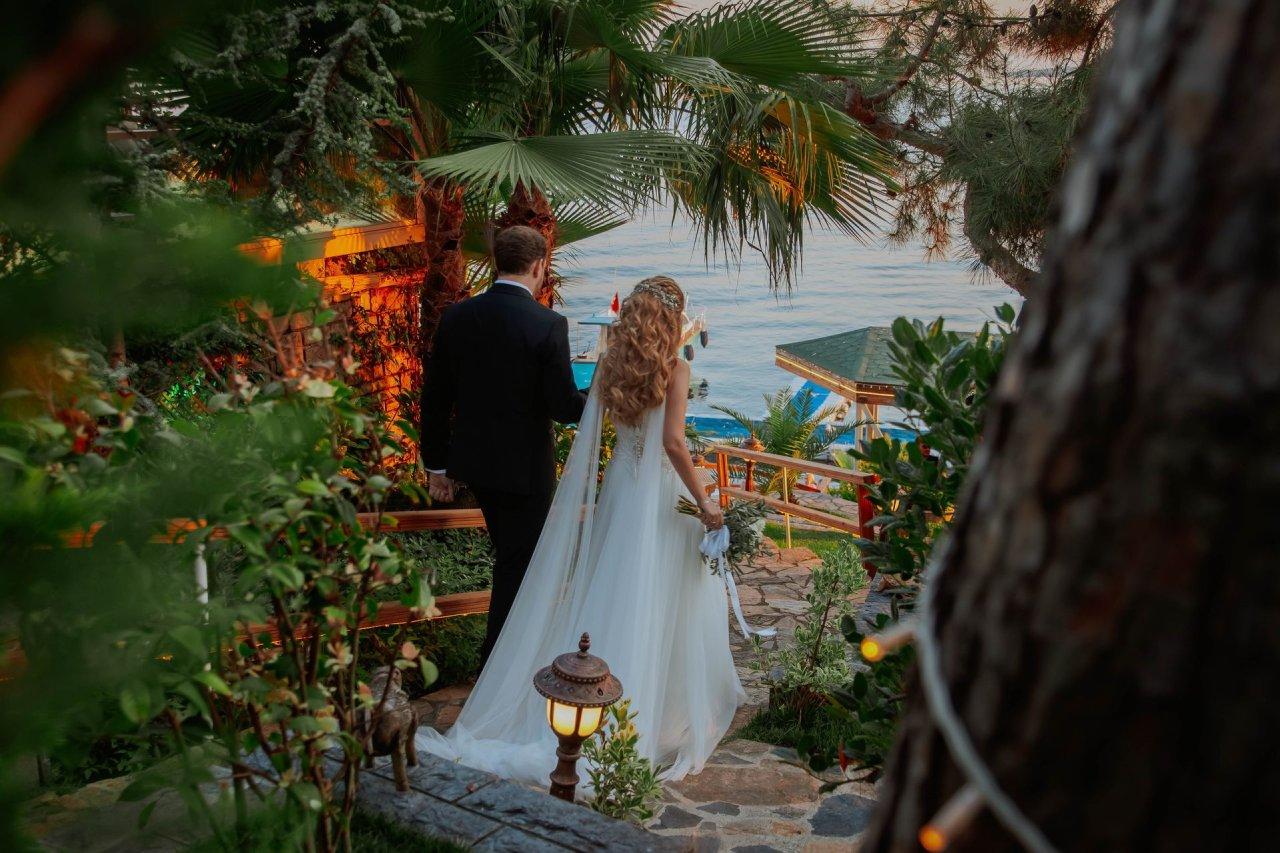
A destination wedding is a wedding held somewhere other than the couple’s usual home location. It can take place abroad, but it does not have to. A different city, island, coastal setting or other intentionally chosen destination can all fit the concept.
What makes a destination wedding different is not distance alone. Travel, guest logistics, accommodation needs, weather planning, venue operations and coordination often become a more visible part of the wedding plan. The destination is therefore both the setting and part of the experience itself.
What Is a Destination Wedding?
A destination wedding is a wedding planned in a location outside the couple’s usual place of residence. That location may be in another country, but international travel is not a requirement. A couple may choose a different city, an island, a coastal area or another setting that gives the wedding a distinct sense of place.
This is important because the term is often interpreted too narrowly. A destination wedding does not automatically mean a tropical beach ceremony, a multi-day resort programme or a wedding thousands of kilometres from home. The common element is that the couple intentionally chooses a destination that requires the wedding to be planned around that location.
As a result, the venue is only one part of the decision. Couples also need to think about how guests will arrive, whether accommodation is required, how services will be coordinated, how weather may affect the event and how the wedding-day timeline works within the chosen destination.
For example, a couple living outside Türkiye may choose Istanbul as the place where their families and friends come together. A couple living in Istanbul may choose an island setting that feels entirely removed from the city. Both can fall within the destination wedding concept because the location changes the logistics and the experience of the celebration.
The strongest destination weddings are therefore not defined by distance. They are defined by how intentionally the location is integrated into the wedding.
What Does Destination Wedding Mean?
The phrase destination wedding refers to a wedding that takes place away from the couple’s everyday home location and requires the celebration to be organised around a chosen destination.
The word “destination” does not necessarily mean a famous resort or an overseas country. It simply means the wedding location has been selected as a destination in its own right.
That distinction matters because destination weddings can take many forms:
- an island wedding reached by sea,
- a wedding in another city,
- a coastal celebration,
- a historic setting,
- a wedding in the couple’s home country while they live abroad,
- or an international wedding where guests travel from several countries.
The concept is flexible, but the planning principle stays consistent: the location affects more than aesthetics.
Transport, guest communication, accommodation, catering operations, technical infrastructure, weather contingencies and supplier coordination can all become more important when a wedding is being organised away from the couple’s usual base.
A well-planned destination wedding is therefore not simply a beautiful venue in a different place. It is a wedding in which location and logistics are designed together.
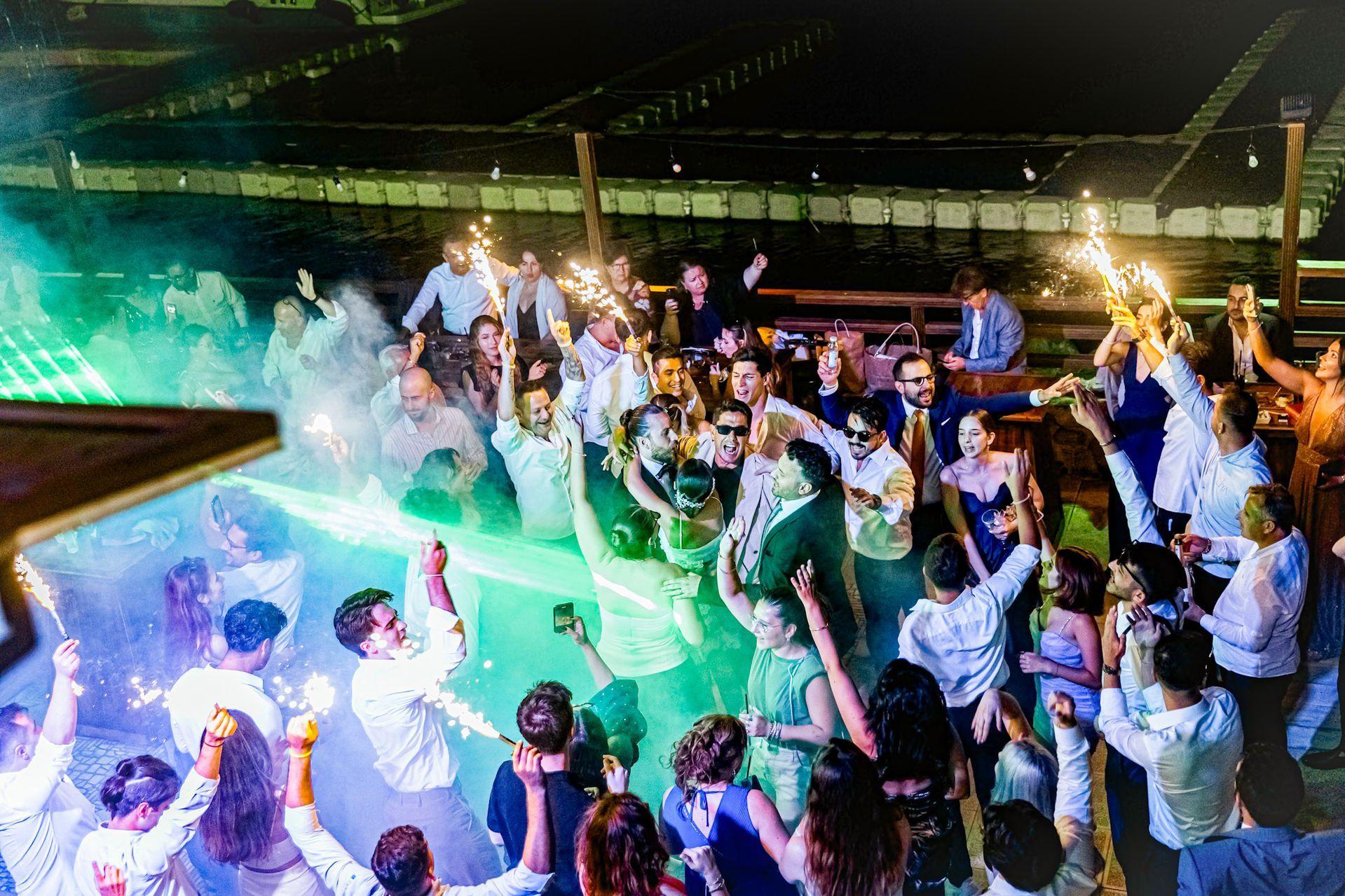
Destination Wedding vs. Traditional Wedding
There is no universal rule that separates every destination wedding from every traditional wedding. Guest counts, budgets, schedules and formats vary from couple to couple.
The clearest difference is that a destination wedding places more responsibility on the location itself. Travel and logistics usually become more visible parts of the planning process.
| Planning Area | More Local / Traditional Wedding | Destination Wedding |
|---|---|---|
| Location | Often held in or close to the city where the couple lives. | Held in a deliberately chosen destination away from the couple’s usual base. |
| Guest Planning | Many guests may already be local. | Guests may be travelling from different cities or countries, making travel information more important. |
| Planning Process | In-person meetings can be easier to arrange. | Remote communication and central coordination may play a larger role. |
| Transport | Usually part of normal local travel. | Sea, road or air travel may need to be considered as part of the wedding plan. |
| Overall Experience | The wedding day may be the primary focus. | The destination itself can become a meaningful part of the guest and couple experience. |
A destination wedding is not automatically smaller, longer or more expensive. Those assumptions do not apply to every celebration.
A large destination wedding can be planned in one day. A smaller wedding can take place close to home. Costs depend on the venue, services, destination, guest structure and choices made by the couple.
The more useful distinction is this: in a destination wedding, the chosen place has a stronger influence on how the entire celebration is planned.
Who Is a Destination Wedding For?
A destination wedding is not limited to one type of couple. It can make sense whenever the couple wants the location to carry more meaning or when guests are already travelling from different places.
Couples who want to marry somewhere beyond their home city
Some couples simply do not want their wedding to feel tied to where they currently live. They may have an emotional connection to another city, the sea, an island or a particular landscape.
A destination wedding gives them the freedom to choose a location that reflects the atmosphere they want rather than limiting the decision to their immediate surroundings.
Couples living abroad
For couples who live abroad and are considering a destination wedding in Türkiye, this planning model can provide a practical framework for bringing families and guests together in one chosen location.
The crucial question is not only where the wedding will happen, but how much of the planning can be managed remotely. A venue and team experienced in remote decision-making can reduce the need for repeated travel during the preparation period.
Couples whose families and guests live in different places
When families and close friends are already spread across different cities or countries, there may be no single location that is “local” for everyone.
In that situation, choosing a shared destination can become a natural part of the wedding plan.
Couples who care about the setting as part of the experience
For some couples, the venue is more than the room or garden where the ceremony takes place.
The sea, the journey to the venue, the surrounding landscape, the sunset, the dining environment and the atmosphere of the destination may all contribute to how the wedding is remembered.
Couples who prefer centralised planning
A destination wedding may involve venue operations, decoration, catering, photography and video, music, technical production and transport.
Couples who prefer to manage these elements through a more central structure may benefit from a venue or team capable of coordinating multiple services together.
Why Do Couples Choose Destination Weddings?
There is no single reason couples choose a destination wedding. The decision usually combines emotional preferences with practical considerations.
The destination becomes part of the wedding story
In a destination wedding, guests do not simply arrive at a venue. The location can shape the journey, the atmosphere, the photographs and the rhythm of the day.
For an island wedding, the sea journey may become part of the arrival experience. In another destination, the surrounding city or landscape may influence accommodation, guest movement and the timing of the celebration.
The setting is not decoration. It becomes part of the event itself.
Wedding and travel can come together
When guests travel from another city or country, the wedding may also become an opportunity to experience a destination they would not otherwise visit together.
This does not mean every destination wedding has to become a multi-day wedding weekend. Some remain focused on a single wedding day. The point is that the destination creates a broader context around the celebration.
Couples can choose a place that feels personal
A couple may choose a location because of family connections, shared memories, the atmosphere they want or simply because it creates the right environment for the wedding they imagine.
The best destination is not necessarily the most famous one. It is the one that works for the couple, their guests and the practical needs of the event.
Remote planning makes professional coordination more important
When couples cannot visit a venue frequently, the planning process needs to work without constant in-person meetings.
Clear communication, visual references, written decisions, defined responsibilities and a central point of contact become particularly valuable.
At Liya All, approximately 40–45% of weddings each season are for couples who live abroad.
That first-hand experience has shown us that the success of a destination wedding depends on much more than the venue itself. Remote communication, guest transport, food service, production and wedding-day coordination all need to work as one connected plan.
How to Plan a Destination Wedding
Destination wedding planning should begin with one central question:
Can the entire wedding operation work smoothly in the destination we have chosen?
A beautiful location matters, but the strongest plans consider beauty and operations together.
1. Evaluate how guests will reach the destination
Accessibility should be reviewed from the guest’s point of view.
Ask:
- Where will most guests be travelling from?
- Will guests arrive independently or need coordinated transport?
- Does the destination involve sea, road or air travel?
- How will guests return after the wedding?
- Is the journey manageable for older guests or anyone with particular accessibility needs?
For island weddings in particular, transportation is not a secondary detail. It is part of the event flow.
2. Understand accommodation needs
Not every destination wedding requires accommodation, but it should be considered early.
If many guests are arriving from other cities or countries, couples should understand:
- whether guests need to stay overnight,
- what accommodation options exist nearby,
- how far those options are from departure or transfer points,
- and how guests will travel after the wedding.
Even when the venue itself does not provide accommodation, clear local guidance can make the guest experience easier.
3. Ask about weather and the alternative plan
Outdoor, waterfront and island weddings need a realistic weather strategy.
Couples should not evaluate a venue only under perfect-weather conditions. Ask what happens if there is rain, strong wind or an unexpected temperature change.
The important question is not whether bad weather is possible. It is whether the venue has already considered how the event will continue if conditions change.
4. Understand how food and service are organised
Food is both a guest-experience decision and an operational one.
Questions worth asking include:
- Where is the food prepared?
- Who manages the kitchen?
- Who provides the service team?
- How are menu selections made?
- How are dietary requirements handled?
- Is there a tasting or menu-selection process?
For couples planning from abroad, a central food and service operation can reduce the number of separate suppliers that need to be coordinated remotely.
5. Review the technical infrastructure
Sound, lighting, power, stage requirements and production logistics should be understood before the wedding day.
This is especially important in open-air locations where technical systems need to work reliably within the physical conditions of the venue.
Couples should know which elements are already available, which need to be added and who is responsible for coordination.
6. Plan guest communication carefully
Destination wedding guests usually need more information than a date and venue name.
Depending on the celebration, useful details may include:
- meeting or departure points,
- transport times,
- return options,
- accommodation guidance,
- venue conditions,
- and any practical information guests should know before travelling.
Clear communication reduces uncertainty and prevents operational questions from becoming wedding-day problems.
7. Define how remote planning will work
If you live in another city or country, ask how decisions will be handled when you are not physically at the venue.
A strong remote-planning process may include:
- one clear point of contact,
- written confirmation of selected services,
- visual references and examples,
- structured decision stages,
- and a shared understanding of the current wedding plan.
The objective is not to remove the couple from the planning process. It is to make the process manageable without requiring constant travel.
8. Know who coordinates each service
A destination wedding may involve decoration, gastronomy, photography and video, music, technical production, transport and wedding-day management.
These can be coordinated through separate suppliers or within a more central operating structure.
Neither model is automatically right for every couple. What matters is knowing exactly who is responsible for each part and how those teams communicate with one another.
Planning a Destination Wedding in Istanbul?
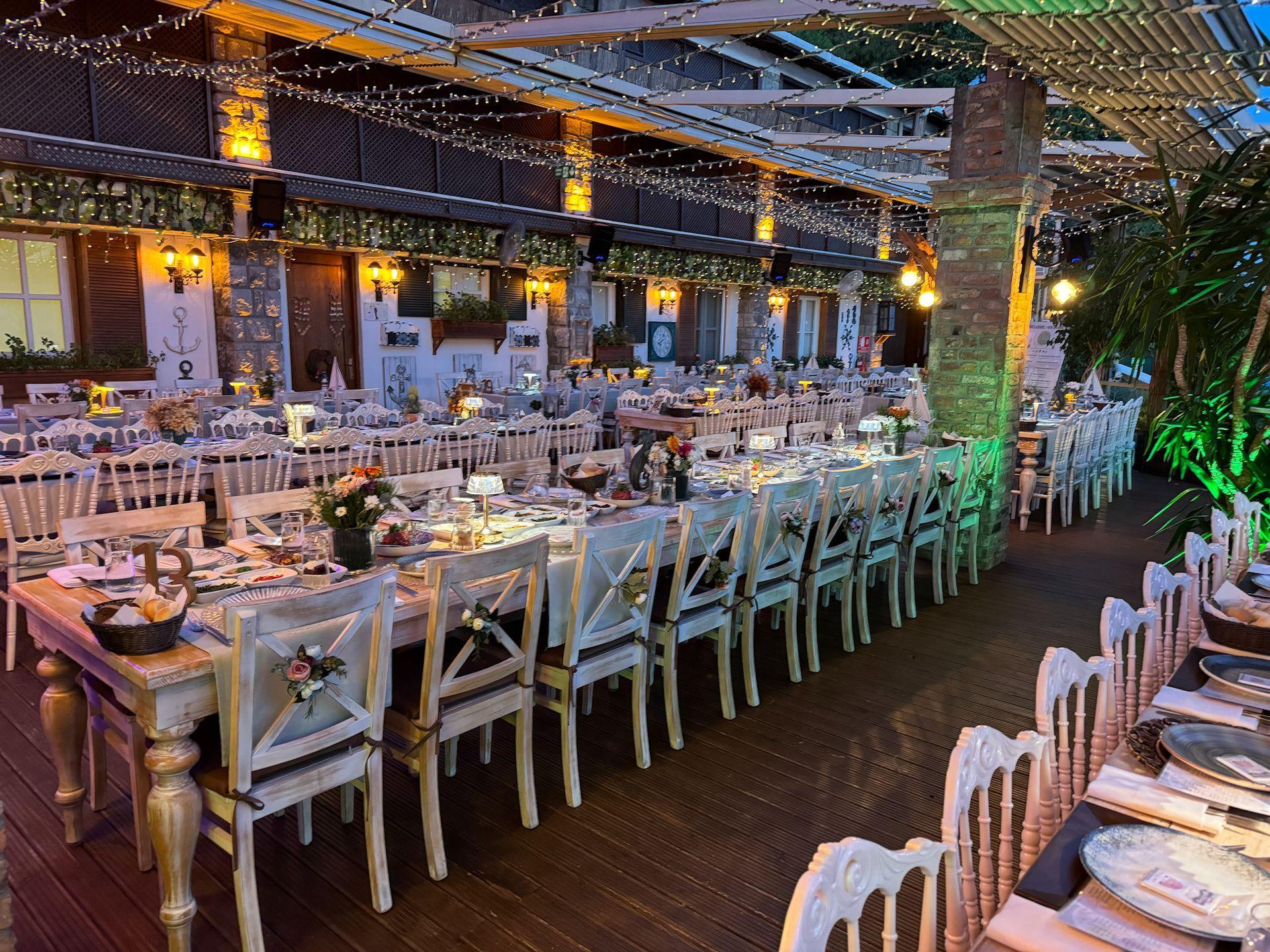
If you are considering Istanbul for your wedding, explore how Liya All plans destination weddings on Sedef Island through remote coordination, sea transportation, in-house gastronomy and its All’N One service model.
Is Türkiye a Good Destination Wedding Location?
For couples considering a destination wedding in Türkiye, the country offers a wide range of settings, from international cities and waterfront locations to coastal destinations, historic areas and islands.
This variety can make Türkiye relevant to very different destination wedding styles. The right choice, however, depends on the couple’s guest profile, preferred setting, travel requirements and how the wedding will be organised.
Rather than asking whether Türkiye is universally the “best” destination, couples should ask whether it works for their specific wedding.
Consider:
- Where will guests be travelling from?
- Do you want a city, coast, island or another type of setting?
- How much of the planning needs to happen remotely?
- Will guests require accommodation guidance?
- How will transportation work on the wedding day?
- Can the venue coordinate the services you need?
- What happens if weather conditions change?
A destination wedding in Türkiye can work particularly well when the chosen location combines a strong sense of place with an operating structure capable of managing the practical details around it.
For couples with family ties to Türkiye who currently live abroad, the country can also serve as a natural meeting point between a familiar cultural context and an international guest journey.
The destination itself is only the first decision. The more important question is whether the chosen venue and team can turn that destination into a wedding plan that works.
Why Consider Istanbul for a Destination Wedding?
Istanbul offers something different from a conventional resort destination.
For international couples planning a wedding in Istanbul, the city offers a distinctive combination of global connectivity, waterfront settings, layered history and very different environments within the same destination. A couple can remain connected to Istanbul while choosing a setting that feels removed from everyday urban life.
That contrast is especially visible around Istanbul’s islands.
An island wedding introduces a natural transition between the city and the celebration. Guests leave the mainland, travel by sea and arrive in an environment with a different pace and atmosphere.
For couples considering a destination wedding in Istanbul, that journey can become one of the defining parts of the day.
The operational questions are therefore important:
- Where do guests board?
- How is transportation coordinated?
- Are different guest groups travelling from different points?
- What return options are available?
- Who manages the transfer schedule?
- How is the wedding timeline connected to arrival and departure times?
These questions illustrate why destination wedding planning should never focus on photographs alone.
Istanbul can offer an exceptional setting, but the quality of the experience depends on how well the venue, transport and wedding operation work together.
Destination Weddings at Liya All on Sedef Island
Liya All is a waterfront wedding and event venue on Sedef Island in Istanbul, designed around an operating model in which the venue, wedding services and island logistics can be coordinated together.
For couples who live abroad, one of the most important parts of Liya All’s destination wedding experience is the ability to manage a significant part of the preparation remotely.
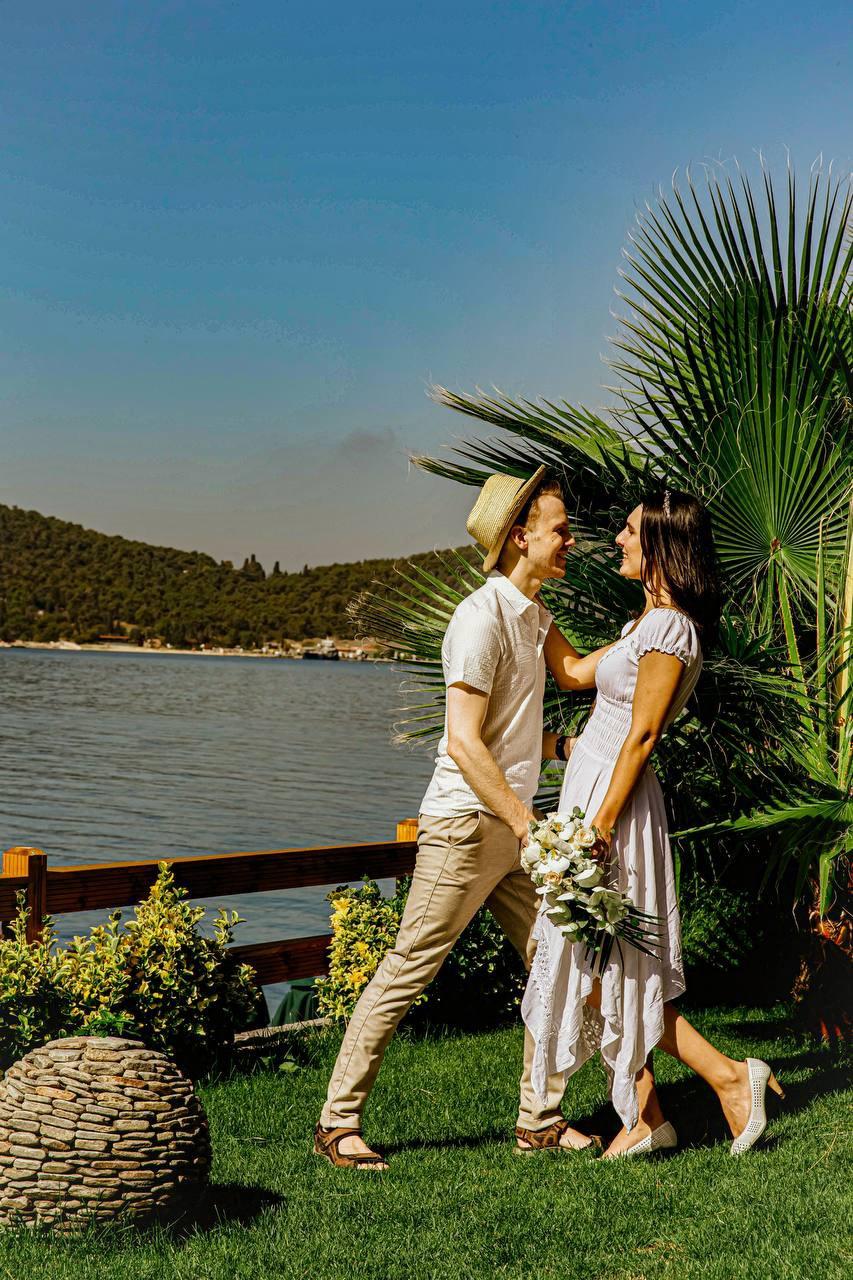
Approximately 40–45% of weddings held at Liya All each season are for couples living outside Türkiye. This makes international and diaspora couples a regular part of Liya All’s real wedding operation rather than an occasional exception.
Remote planning
Couples do not need to travel to Istanbul for every individual planning decision.
The preparation process can be coordinated remotely, with key wedding services managed through Liya All’s organisation structure and a defined planning process.
All’N One coordination
Depending on the selected package, Liya All’s All’N One model can coordinate wedding services including:
- wedding planning,
- decoration,
- photography and video,
- music,
- gastronomy,
- and sea transportation.
This reduces the need for couples to manage every operational element independently from abroad.
In-house gastronomy
Food is prepared by Liya All’s own kitchen and teams rather than relying on an external catering operation.
Couples can choose from 11 main-course options, with menu planning handled as part of the wedding preparation process.
Sea transportation to Sedef Island
Reaching Sedef Island is part of the wedding-day experience.
Liya All’s current wedding transportation structure includes:
- a private Axopar motor yacht for the couple,
- sea transportation for family and close guests departing from Dragos,
- guest transfers departing from Bostancı,
- and three different return times at the end of the night.
This structure matters because an island destination wedding is only successful when arrival and departure are planned as carefully as the celebration itself.
The transport plan is not treated as an external detail left for guests to solve individually. It is integrated into the wider wedding operation.
For full details about Liya All’s commercial destination wedding offering, remote planning model and services on Sedef Island, visit: Destination Weddings in Istanbul
Before choosing a destination wedding venue, confirm the following:
- Is the location practical for the majority of your guests?
- Is guest transportation clearly planned?
- Do guests need accommodation nearby?
- Is there an alternative plan for changing weather conditions?
- Who prepares and serves the food?
- Who is responsible for sound, lighting and technical production?
- Can planning be managed remotely if you live abroad?
- Is there one clear point of contact?
- Who coordinates decoration, photography, music and other wedding services?
- Is the guest arrival and return plan fully defined?
A destination can be visually impressive and still be difficult to operate. The strongest venue choice is one that works both emotionally and operationally.
Frequently Asked Questions
What is a destination wedding?
A destination wedding is a wedding held away from the place where the couple normally lives. It can take place in another country, but it may also be held in a different city, on an island, by the coast or in another intentionally chosen location. The defining feature is that the destination becomes part of how the wedding is planned and experienced.
What does destination wedding mean?
“Destination wedding” means choosing a wedding location outside the couple’s usual home base and planning the celebration around that destination. Travel, guest logistics, accommodation needs, weather and coordination may therefore play a larger role than they would in a more local wedding.
Does a destination wedding have to be abroad?
No. A destination wedding does not have to take place in another country. A couple can plan a destination wedding in a different city, island or region within the same country. What matters is that the wedding is held in a destination away from the couple’s usual everyday location.
How do you plan a destination wedding?
Start by evaluating the destination from both an emotional and operational perspective. Consider guest travel, accommodation needs, weather, food and service, technical infrastructure, guest communication and how suppliers will be coordinated. If you live abroad, also establish how decisions will be made remotely and who will be your main point of contact.
Is a destination wedding more expensive than a traditional wedding?
Not necessarily. There is no universal cost rule. The total depends on the destination, venue, guest count, travel requirements, services, accommodation needs and the choices made by the couple. A destination wedding should be evaluated through a complete budget rather than assumed to be automatically more or less expensive.
Is Türkiye good for a destination wedding?
For couples planning a destination wedding in Türkiye, the country offers a wide range of city, waterfront, coastal, historic and island settings. Whether it is the right choice depends on where guests are travelling from, the couple’s preferred environment and how well the chosen venue can manage transport, services and remote planning.
Can you have a destination wedding in Istanbul?
Yes. Istanbul can be used as a destination wedding location for couples living abroad or for couples who want a distinctive setting away from their normal environment. Waterfront and island locations can create a particularly strong sense of destination while remaining connected to Istanbul.
Can an Istanbul destination wedding be planned remotely?
Yes, depending on the venue and its operating model. At Liya All, couples living abroad can manage a significant part of the planning remotely. Depending on the selected package, services such as wedding planning, decoration, photography and video, music, gastronomy and sea transportation can be coordinated through the All’N One structure.
What should guests know before a destination wedding?
Guests should receive clear information about where to arrive, transportation times, return arrangements, accommodation if relevant and any practical details connected to the venue. The exact information depends on the destination, but early and clear communication is especially important when guests are travelling.
What is the most important part of destination wedding planning?
There is no single element that matters in isolation. The location, transportation, guest logistics, weather plan, food service, technical infrastructure and overall coordination need to work together. For couples planning from abroad, clearly defined responsibilities and reliable remote communication are particularly important.
Conclusion
A destination wedding is not simply a wedding held somewhere beautiful.
It is a wedding in which the location becomes part of the planning, the guest journey and the overall experience.
That is why choosing a destination should involve more than deciding how a venue looks. Couples should understand how guests will arrive, whether accommodation is needed, how food and technical services are organised, what happens if weather conditions change and who is responsible for coordinating the day.
For international couples, remote planning adds another layer. A clear decision process, central communication and an experienced local operation can make the difference between a destination that looks right and a destination wedding that actually works.
Istanbul offers couples the opportunity to combine an international city with waterfront and island environments. On Sedef Island, Liya All brings that destination context together with sea transportation, in-house gastronomy and an operating model built around coordinating the wedding as one connected experience.
Destination Weddings in Istanbul
Discover destination wedding planning on Sedef Island with Liya All, from remote coordination and sea transportation to in-house gastronomy and the All’N One wedding experience.